Irene Suroso
Senior Engineer, Planning & Asset Management
Tell us about your job.
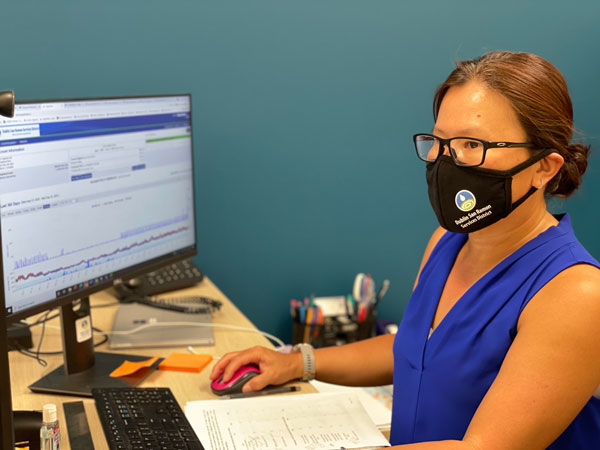
I am one of the Senior Engineers overseeing the Capital and Planning Division. In this role, I supervise staff engineers responsible for developing the District’s master plans and delivering capital projects. Our work requires close collaboration with all divisions including operations, mechanical, electrical, finance, regulatory, and customer service, to ensure that every perspective is considered and integrated. We ensure that all planning efforts and capital projects align with the District’s mission and support District’s long-term goal.
How are you working on water conservation?
As part of the long-term planning work, I am closely involved in drought and water conservation-related issues. I lead the District's long-term conservation planning to comply with the regulatory requirements for Making Conservation a California Way of Life.
How did you get into the industry?
Access to clean water is a major issue where I’m from. Tap water isn’t drinkable, so families either boil water or rely heavily on bottled water, which creates significant waste. Indonesia lacks advanced water treatment technology, and it’s not uncommon for utilities to shut down service to entire neighborhoods for infrastructure repairs. When that happens, people can go a week or two without water, collecting whatever they can ahead of time.
Working at DSRSD has shown me what reliable service truly looks like. When we need to shut down part of our system, we make every effort to keep customers connected through alternative means. That level of resiliency and customer care is not a luxury people have in many places, including where I grew up, and it’s one of the many reasons I’m proud to work in this industry.
What are some of the biggest challenges of your job?
One of the biggest challenges in my role is the sheer volume of projects and planning work paired with limited time. Long‑term planning can also be difficult because projections are never exact. We rely on history and data, but uncertainties always remain. For example, estimating conservation five years out is complex. More than half of our service area consists of newer homes with water‑efficient appliances, which limits additional indoor conservation opportunities.
Because of that, we put greater emphasis on outdoor water use. Balancing these factors while planning responsibly for the future is a continual challenge, but it is also one of the most important and rewarding aspects of my job.
What is the best part of your job?
Some of the challenges are also the best part. I enjoy uncertainties when planning. I make my best projections using engineering judgment, create a demand model, and try to anticipate the future, which keeps the work dynamic and intellectually stimulating.
What do you like to do in your free time?
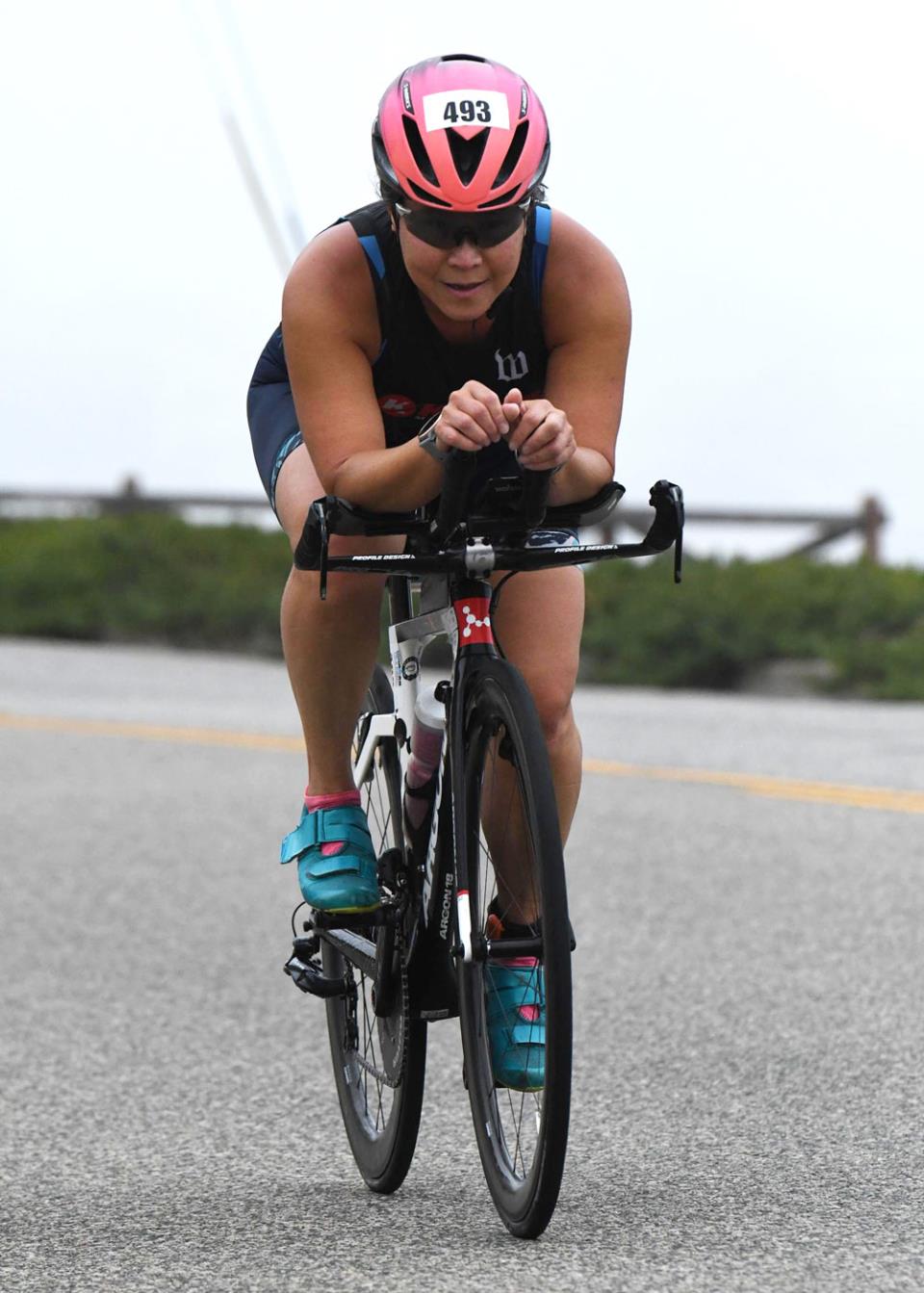
Outside of being an engineer, I’m proud to say I’ve been a triathlete for many years and enjoy doing multi-day endurance activities. All this helps me stay aligned with the goals I set each year, and it genuinely makes me happy and excited when I meet or exceed them. And when I don’t, I reflect on what didn’t go as planned and adjust for the next event. I’m motivated by the process, and the sense of accomplishment keeps me going. I’m also proud that I’ve successfully completed two full Ironman races and more than a dozen Half Ironman distances. Another fun part of triathlons is the travel—there’s a race almost anywhere in the world, and I always add a post-race vacation to enjoy the local culture.