Water Quality
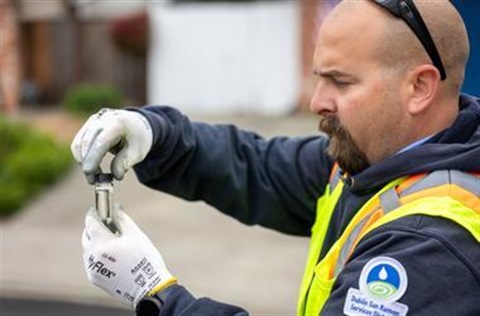
Algal Blooms Affect Water Taste and Odor
The Tri-Valley can experience taste and odor impacts to our regional tap water due to seasonal algal blooms in the Delta that can cause drinking water to taste and smell earthy or musty. Zone 7 Water Agency's treatment processes ensure the water is safe to drink and meets all state and federal standards. Algal blooms occur most often in warm weather and usually clear up naturally within a week or two.
In addition to the local groundwater basin source, the Tri-Valley is primarily supplied by two surface water treatment plants, Del Valle Water Treatment Plant and Patterson Pass Water Treatment Plant. Zone 7 recently completed an ozonation project in 2020 at the Del Valle Plant, which can help reduce the taste and odor resulting from this type of biological activity. The ozonation upgrade project has been completed for the Patterson Pass Plant. Depending on where you live in Dublin or the Dougherty Valley, your delivered water can come from any combination of groundwater from the basin, surface water from the Del Valle Plant, and surface water from the Patterson Plant.
These sources will often shift back and forth as we move through the peak summer demands. As tap water tastes and odors shift, the most effective solution to improve taste is a simple carbon-based filtration system, often designed as a water pitcher or a faucet attachment. Chilling tap water and adding lemon or lime can also be helpful ways to reduce any earthy tastes.
When water-borne algae are present in the water coming into its treatment plants, Zone 7 also can add powdered activated carbon. This treatment reduces unpleasant taste and odor, but is not 100 percent effective.
For more information, read Zone 7's FAQs on water quality and see the Water Quality FAQs below.
How We Monitor Drinking Water for Safety
Federal and state regulations require close monitoring of all water supplies. The water the district supplies to customers meets or exceeds all primary and secondary drinking water standards.
Many people work every day to protect the quality of our water. DSRSD employees collect representative samples from 60 locations throughout the water distribution system. The district’s laboratory, which is certified by the State Water Board Division of Drinking Water’s Environmental Laboratory Accreditation Program, analyzes the samples. Zone 7 also monitors water quality continuously online, as well as with instantaneous, or “grab,” sampling. In all, DSRSD and Zone 7 test for more than 100 water quality standards, including coliform bacteria, minerals, metals, fluoride, residual amounts of chlorine used as a disinfectant, and many other chemicals.
DSRSD publishes a water quality report - also known as a consumer confidence report - by June 30th each year that summarizes water quality monitoring results from the previous calendar year. We notify all customers when the report is available on our Water Quality Reports webpage. To request a printed copy, call Customer Service at 925-828-8524. Zone 7 also publishes an annual Consumer Confidence Report.
Water Quality FAQs
What is being done to improve water taste and address blue-green algae?
During warm months when algae blooms are more likely in the Delta, Zone 7 adds powdered activated carbon to the water to remove some of the harmless taste-and-odor-causing compounds, such as geosmin, released by algae.
The Department of Water Resources monitors for toxic compounds released by algae, including cyanotoxins produced by some blue-green algae, throughout the State Water Project. In addition, Zone 7 implemented its own algal toxins monitoring in 2016. Blue-green algae are appearing more frequently in water bodies such as the Delta and Lake Del Valle, which supply water to Zone 7.
A study of Zone 7’s source water identified ozone as the only effective treatment of such cyanotoxins. Zone 7 is designing improvements that will add ozone treatment to surface water provided to DSRSD and other Tri-Valley water retailers. In addition to removing algal toxins, ozonation will reduce disinfection by-products and improve the taste and odor of our water more effectively than current treatments. Provided that Zone 7 obtains construction financing, ozonation is scheduled to begin at the Del Valle treatment plant by 2019 and at the Patterson Pass plant by 2021.
Does our tap water contain fluoride?
Yes. Nearly all water contains some fluoride, but usually not enough to help prevent tooth decay or cavities. Community water systems can add the right amount of fluoride to their local drinking water to prevent tooth decay. Voters in the District’s service area approved fluoridation in 1974 and treatment began in 1977.
DSRSD maintains the optimal level of 0.7 milligrams of fluoride per liter of water (mg/L) and a control range of 0.6 to 1.2 mg/L, as required by federal and state regulations. In 2015, the U.S. Department of Health and Human Services Agency recommended that water systems adjust their fluoride content to this new optimal level, as opposed to the previous temperature-dependent optimal levels ranging from 0.7 mg/L to 1.2 mg/L. There was no change regarding health officials' strong and long-standing support regarding the value of fluoridation of drinking water. More information on fluoridation is available on the Centers for Disease Control and Prevention and State Water Resources Control Board websites.
How hard is our water?
Hardness is caused by naturally occurring minerals and is measured by the amount of calcium carbonate in the water, expressed either as milligrams per liter (mg/L) or grains per gallon (gpg). Our water is moderately hard to hard, with 90 percent of samples in the range of 115-324 mg/L (7-19 gpg). Because our water is a variable blend of surface and well water, hardness changes throughout the year and by location in the district. During shortages of surface water supplies (such as from the State Water Project), water hardness can be higher than normal because Zone 7 is blending in more groundwater. Zone 7 also may minimize operation of its demineralization plant to conserve water.
How often is water tested?
Samples collected from many places along the distribution pipelines are tested at least once a month for coliform bacteria, chlorine residuals, and fluoride. In addition, fluoride is monitored 24/7 online, and daily field samples are taken to ensure compliance with the operating range required by the state’s Division of Drinking Water (DDW). Field samples are also cross-checked weekly in the DSRSD lab. Other water quality parameters, including pH, hardness, alkalinity, conductivity, turbidity, and color, are monitored monthly. The level of total dissolved solids (TDS) is checked weekly. We monitor for other contaminants according to schedules established by DDW or other regulatory agencies. Zone 7 also performs many quality tests before it delivers the water to DSRSD.
Is our water tested for lead?
Yes, both DSRSD and Zone 7 test for lead. In addition, Zone 7 adjusts the pH of our water to prevent plumbing corrosion, which is the main source of lead in tap water. Learn more on our Lead page.
What do I do if I have problems with my water or other questions?
Please contact Customer Service at (925) 828-8524 or CustomerService@dsrsd.com.
What do you advise about water softeners?
The District discourages customers from installing self-regenerating water softeners because they add excess amounts of salt to our wastewater, which in turn increases the salinity of recycled water used for irrigation. Learn more on our Water Hardness & Softeners page.
What is being done to improve water hardness?
Zone 7 uses a demineralization process to slow down the buildup of salts and minerals in our groundwater basin and reduce the hardness of groundwater pumped from the Mocho Wellfield in western Pleasanton. During water shortages, Zone 7 may minimize demineralization, since some water is lost during the process.
Why does our water taste different than EBMUD's?
East Bay Municipal Utility District (EBMUD) gets most of its water from the Mokelumne River watershed and channels it into an aqueduct east of the Sacramento-San Joaquin Delta. The water never passes through the delta and that’s why it tastes different than DSRSD’s water, which is a blend of surface water that has flowed through the delta and groundwater extracted from local wells. DSRSD’s water will taste less like the delta once Zone 7 begins ozone treatment (see next question).
Why does the taste of our tap water sometimes change?
Many factors can affect the taste of water. DSRSD’s water is a blend of surface water and groundwater. The blend changes throughout the year and these variations can change taste and odor. Chlorine used to disinfect the water supply occasionally produces a chemical odor. Rapid algae growth in the delta can cause an earthy, musty, or plastic taste or odor. (Algae “blooms” can occur at any time but are most common from late spring through early fall.) These changes in taste or odor do not affect the safety of the water.
Rotting food in garbage disposal or bacteria in the P-trap under the drain can also cause a foul smell. To get rid of the odor, fill the sink with hot water, add an ounce of household bleach, and allow the water to drain slowly. If you have a water filter on your faucet or refrigerator, be sure to change it as often as recommended; otherwise, it becomes a breeding ground for bacteria that can make you sick.