Lead in Drinking Water
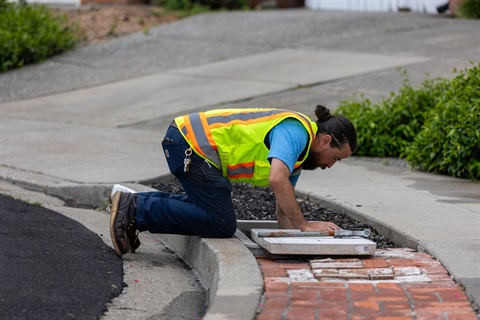
The United States Environmental Protection Agency (U.S. EPA) works closely with water agencies across the nation to reduce human exposure to lead in tap water. This work is necessary because lead was once a commonly used material for household plumbing fixtures, water pipes, and solder for copper pipes. Lead can get into drinking water as it passes through pipes and plumbing materials that contain lead. Elevated levels of lead can cause serious health problems, particularly for pregnant women and children.
Lead is not present in the source water purchased from Zone 7 Water Agency, and Dublin San Ramon Services District (DSRSD) has never used lead pipes or solder in its water system. However, your drinking water is still routinely tested by both DSRSD and Zone 7 Water Agency for lead to comply with all state and federal regulations.
Zone 7 Water Agency Testing
Zone 7 Water Agency tests its water supply for lead and administers a Corrosion Control Program to keep drinking water pH slightly alkaline.
Source Water Testing
Your drinking water is treated by Zone 7 Water Agency (Zone 7). Zone 7 performs monthly tests to measure the amount of lead in its water supply. These tests routinely show less than one part per billion of lead. One part per billion is equivalent to a single drop of water in an Olympic-sized swimming pool.
Corrosion Control Program
Zone 7 Water Agency has a corrosion control program, which minimizes corrosion in both DSRSD’s water pipes and in our customers’ household plumbing. If any lead plumbing or fixtures exist, corrosion control minimizes lead leaching into the water. Adjusting the pH has been the approved optimized form of corrosion control. Zone 7 monitors the pH of its water 24 hours a day. Water that is acidic (pH below 7.0) tends to be corrosive, which causes metals in plumbing fixtures to dissolve. Zone 7 ensures our water supply is slightly alkaline (pH above 7.0) to help prevent any lead that might be present in plumbing fixtures from leaching into your tap water.
Visit the Zone 7 Water Agency website to learn more about water quality.
Dublin San Ramon Services District Testing
DSRSD is responsible for delivering drinking water from Zone 7 Water Agency’s treatment facilities to homes and businesses across our service area. The U.S. EPA requires water agencies to periodically test for lead in household plumbing fixtures, water service lines, and school campuses within their service area.
Lead & Copper Sampling Program
Though California now requires new household plumbing, fixtures, and solder to be lead-free, lead may still be present in some older houses built before this ban went into effect.
Every three years, DSRSD is required to test indoor tap water from a sample of homes built before 1986, when plumbing fixtures were allowed to contain lead.
The latest sampling occurred in 2025. Samples from 31 homes determined that DSRSD’s water distribution system is below regulatory action levels for lead and copper.
A regulatory action level means that if the concentration of a contaminant is above this limit, the water agency must take actions such as investigating the source of contamination, offering public education, or completing additional treatment.
View our Annual Water Quality Report to see the test results from the latest lead and copper sampling. The District’s next lead and copper sampling will be in 2028.
Water Service Line Inventory
The U.S. EPA Lead and Copper Rule Revision required water agencies to create water service line inventories by October 2024.
A water service line is the pipe that connects buildings to the larger water main pipe underneath the street. The purpose of these inventories was to create databases of water service line materials, specifically identifying any pipes made of lead or classified as “galvanized requiring replacement”. Pipes are classified as galvanized requiring replacement if they are made of galvanized steel and are/were historically downstream of a lead pipe.
After completing a historical records review and field investigations, DSRSD determined there are no service lines made of lead or galvanized lines requiring replacement in its distribution system. View the DSRSD Potable Water Service Line Inventory.
Lead Testing in Schools
In 2017, the State Water Resources Control Board Division of Drinking Water required water agencies like DSRSD to test for lead in schools if school districts requested to be tested. The California legislature then passed Assembly Bill 746, requiring water systems to test for lead in drinking water at all public K-12 schools by July 1, 2019. The testing involved sampling water at taps throughout the school, such as drinking fountains and kitchen facilities.
By the end of 2018, the District had tested all 20 public schools and one private school in its service area (St. Raymond School was the only private school that requested lead testing).
All tests were below the action level. The Federal Lead and Copper Rule Improvements will require DSRSD to retest most schools and begin testing daycare centers in 2028.
Frequently Asked Questions
Should I have my water tested for lead?
If you are concerned about lead in your drinking water, you can have it tested. The U.S. EPA recommends using a laboratory accredited by the state Environmental Laboratory Accreditation Program. Three local accredited labs that perform drinking water testing for consumers are listed below. It is the customer’s responsibility to confirm that lab’s accreditation is current. The list below is not exhaustive. DSRSD does not endorse any of the labs listed below.
Alpha Analytical Laboratories
925-828-6226
Livermore, CA
CalTest Analytical Laboratory
707-258-4000
Napa, CA
McCampbell Analytical Inc.
925-252-9262
Pittsburg, CA
Torrent Laboratory
408-740-3624
Milpitas, CA
Will DSRSD test my home's water for lead?
No, DSRSD's laboratory does not offer a commercial testing service. Participants for the Lead & Copper Sampling Program are selected based on specific parameters set by state and federal regulations, so we cannot accept volunteers.
How can I reduce my exposure to lead in drinking water?
If you are concerned there may be lead in your home's plumbing, you can reduce potential lead exposure by flushing out water that has been sitting in the pipes for six hours or more. Run the faucet for 30 seconds to 2 minutes before using the water for drinking or cooking. (Please capture and reuse this water for other purposes such as watering plants.) Use cold water for drinking, cooking, and making baby formula. Lead leaches more easily into hot water than cold. You can find more guidance at DrinkTap.org.