Water Hardness & Softeners
What is “Hard” Water?
Drinking water is considered “hard” if it has high levels of naturally occurring minerals like calcium and magnesium. Hard water is more commonly found in groundwater sources than in surface water. This is because groundwater travels slowly through rock and soil, allowing it to dissolve more minerals along the way. Surface water, found in rivers and lakes, typically has lower mineral content because it flows more quickly.
Why Does Our Water Hardness Change?
Since the water delivered by Dublin San Ramon Services District is a variable blend of surface and groundwater, hardness changes year to year. During droughts, water hardness is often higher because the Tri-Valley relies more on local groundwater supplies.
In 2009, Zone 7 Water Agency, which treats the Tri-Valley’s drinking water, began operating a groundwater demineralization plant in Pleasanton. The demineralization plant uses reverse osmosis to remove minerals from the groundwater pumped from the Mocho Wellfield, resulting in softer water for customers. However, Zone 7 has reduced demineralization during past droughts, since some water is lost during the process.
Dublin San Ramon Services District publishes its water quality testing results, which include water hardness, in its Annual Water Quality Reports. View our latest Annual Water Quality Report to see the range of your water’s hardness during the past year.
What Issues Are Associated with Hard Water?
Hardness can affect water’s taste and the performance of household appliances. Hard water deposits can build up on dishware, plumbing fixtures, and shower doors, and hardness may cause poor soap and detergent performance. Hard water can also cause scale on pipes and fixtures that can eventually lead to lower water pressure and reduced efficiency for water heaters.
How Can I Treat My Water to Reduce Hardness?
If you would like to reduce the hardness of your drinking water, you can install a water softener. Dublin San Ramon Services District encourages its customers to use an exchange tank service or no-salt softening systems over installing self-regulating water softeners.
Preferred Water Softening Methods
If having soft water is important to you, consider using an exchange tank service. An exchange tank service company will install portable water softening tanks at your home and replace them on a regular schedule. The company disposes of the brine in the tanks under controlled conditions, so it never enters our wastewater, recycled water, or groundwater basin.
Residents are also encouraged to consider “no-salt” water-softening systems, such as those that use activated carbon adsorption, reverse osmosis, or other technologies.
Why Avoid Self-Regulating Water Softeners?
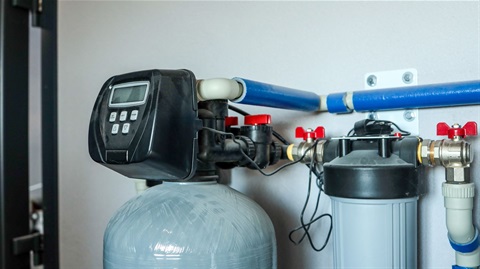
Self-regulating (or automatic) water softeners exchange harder minerals (calcium and magnesium) for softer minerals (sodium or potassium) in drinking water. This ion exchange occurs as water passes through a resin bed. Periodically, the resin must be "regenerated" with a concentrated salty brine. The leftover brine from this operation goes down the drain into the public wastewater system.
Dublin San Ramon Services District discourages customers from installing these types of softeners because the added salt increases the salinity of recycled water, which eventually impacts groundwater quality and raises treatment costs for all customers.
It is important to note that physicians may discourage those on low-sodium diets from drinking water softened with a self-regulating system. Additionally, residential water softeners must comply with California Health & Safety Code 116785.